The Lord Will Examine the Heart
(1 Cor. 4:1-7)
*All verses in NLT*
– This is the Apostle Paul’s first letter to the church he planted in Corinth. The church was struggling to reconcile their pagan surroundings with the doctrine in Christ that Paul had taught them.
– One big issue was that the people had begun choosing sides and following one teacher over the others. Paul, Peter, and Apollos were trusted teachers, but the church’s allegiance should be to Christ above all else.
– The problem was that the people were creating division in the church over it.
– Paul told them that they are not in competition, but in fact they are working together for the furtherance of the gospel. Each one plays a role, but none is more important than the other.
– Their other problem was that they had believed themselves wise in their own sight. They thought they knew better about what others should be doing for the church, the value of their calling, or the motives by which others were serving the Lord…
– The Corinthian church needed to regain some perspective, and have a little more humility.
– 1 Cor. 4:1-7 (NLT), So look at Apollos and me as mere servants of Christ who have been put in charge of explaining God’s mysteries. 2 Now, a person who is put in charge as a manager must be faithful. 3 As for me, it matters very little how I might be evaluated by you or by any human authority. I don’t even trust my own judgment on this point. 4 My conscience is clear, but that doesn’t prove I’m right. It is the Lord himself who will examine me and decide. 5 So don’t make judgments about anyone ahead of time—before the Lord returns. For he will bring our darkest secrets to light and will reveal our private motives. Then God will give to each one whatever praise is due. 6 Dear brothers and sisters, I have used Apollos and myself to illustrate what I’ve been saying. If you pay attention to what I have quoted from the Scriptures, you won’t be proud of one of your leaders at the expense of another. 7 For what gives you the right to make such a judgment? What do you have that God hasn’t given you? And if everything you have is from God, why boast as though it were not a gift?

- Regain perspective.
– 1 Cor 4:3-4, 3 As for me, it matters very little how I might be evaluated by you or by any human authority. I don’t even trust my own judgment on this point. 4 My conscience is clear, but that doesn’t prove I’m right. It is the Lord himself who will examine me and decide.
– Paul shows an example of self-perspective in trying to be a leader called to a mission by God. He is trying to do this with humility and self-awareness. We all should evaluate ourselves like this.
– Paul encourages the people to do the same thing.
– Romans 12:3, Because of the privilege and authority God has given me, I give each of you this warning: Don’t think you are better than you really are. Be honest in your evaluation of yourselves, measuring yourselves by the faith God has given us.
– There will be people who question your calling, and possibly think you are a fool for the way you walk it out, but it is your life and calling, not theirs. Your conscious needs to be clear before God.
– Example: Volunteer chaplain who left their civilian job to start a non-profit providing chaplain services for fire departments. Very valuable and necessary, but criticized for being selfish, over leaving his job, no retirement, putting family future in jeopardy, etc…
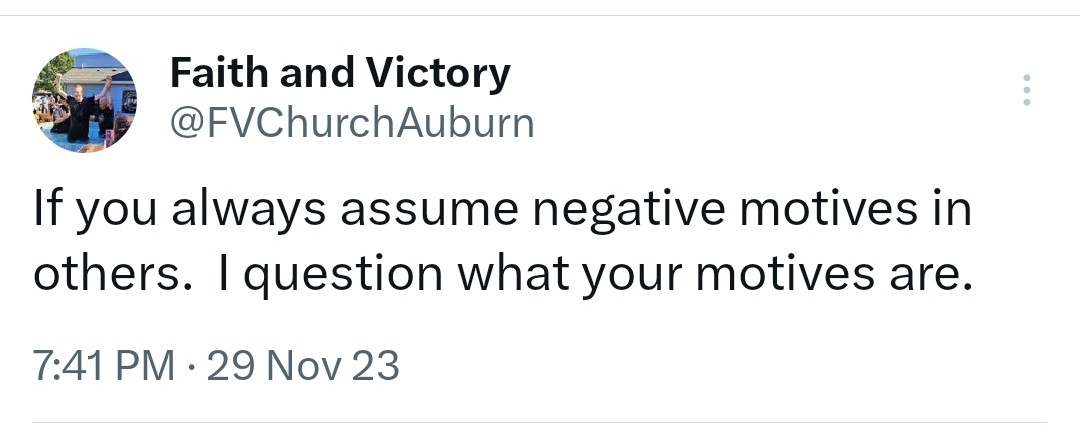
– We often assign motives to the actions we see in others and evaluate them according to OUR own human standard. So… if you always assume negative motives in others, what does that say about your own motives??

- Be careful in your judgements.
– 1 Cor. 4:5, So don’t make judgments about anyone ahead of time—before the Lord returns. For he will bring our darkest secrets to light and will reveal our private motives. Then God will give to each one whatever praise is due.
– There is often confusion about the idea of Christians judging other people. Verse 5 appears to say that we should NOT judge others. In fact, there are many verses that people use to make this point.
– Luke 6:37, “Do not judge others, and you will not be judged. Do not condemn others, or it will all come back against you. Forgive others, and you will be forgiven.
– James 4:12, God alone, who gave the law, is the Judge. He alone has the power to save or to destroy. So what right do you have to judge your neighbor?
– But other verses talk about how Christians CAN judge each other.
– 1 Cor 5:12-13, It isn’t my responsibility to judge outsiders, but it certainly is your responsibility to judge those inside the church who are sinning. 13 God will judge those on the outside; but as the Scriptures say, “You must remove the evil person from among you.
– Pastor Kevin will be preaching this verse next month, so I don’t want to get too deep into it, but I believe the major difference here is between judging motives verses judging actions.
– Sin is sin and should be called out, especially in the community of faith. We are judged by God’s righteous standard. It is our responsibility to help hold our brothers in the faith accountable!
*I think Verse 5 is talking about judging people’s motives in serving God and serving the church.
– Do not presume to know the secret motives and intentions behind someone’s actions. Their actions may be telling you one thing, but you don’t know what is going on inside their heart.
– Example: Diagnosing a medical patient in the field. You must contrast what you see and observe, with the story being told, age, medical history, living situation… and decide the right course of action.
– Anxious, SOB, panicky, distracted: Drugs/anxiety/hypoxic/MI??? … or abuse/neglect?
– Slurred speech, DLOC, diaphoretic: Alcohol/stroke/head injury/diabetic???
– Even if you have seen the same symptoms a hundred times, never forget that what’s going on inside them could be different. Even with the SAME PATIENT!
– It is the same with someone’s motives. Their presentation only tells part of the story. You don’t always know what is going on inside them. Only God can judge the heart!
– You can still point out and address sin, but also consider the underlying cause.
– Be careful about assigning motives! The Lord will reveal a person’s heart, judge their motives, and give rewards where it is due. That is not our job!
– Phil 2:14-15, Do everything without complaining and arguing, 15 so that no one can criticize you. Live clean, innocent lives as children of God, shining like bright lights in a world full of crooked and perverse people.
– Paul’s deepest desire was that he be found faithful before God. Human assessment of him, by himself or by others, didn’t matter to him. Only what God thought matter. This is good perspective.
- Learn some humility.
– 1 Cor. 4:6-7, Dear brothers and sisters, I have used Apollos and myself to illustrate what I’ve been saying. If you pay attention to what I have quoted from the Scriptures, you won’t be proud of one of your leaders at the expense of another. 7 For what gives you the right to make such a judgment? What do you have that God hasn’t given you? And if everything you have is from God, why boast as though it were not a gift?
– The Corinthians were becoming prideful in their expanding knowledge of the scriptures. They began to judge some in the group as better/more valuable, and some less worthy/less valuable. This belief showed in how they viewed Paul and Apollos.
– They only see “one stripe of the beach ball” yet believe they can judge the whole picture.
– Matt 23:11-12, (Jesus said) The greatest among you must be a servant. 12 But those who exalt themselves will be humbled, and those who humble themselves will be exalted.
– Don’t think of yourself as better than someone else because you are more successful over sin, or gifted, or growing in the Lord more quickly. Your ability to do that is from the Holy Spirit inside you.
– Your service to God’s church is supremely valuable, whether it is the diligent and faithful service in the Children’s Ministry, the hard working church cleaners, an elder/preacher, etc… all ministries!
– Remember Romans says, “Be honest in your evaluation of yourselves, measuring yourselves by the faith God has given us.” ?
– Some of us have the seemingly opposite problem from being arrogant. We devalue ourselves, full of self-doubt, overly critical, even to the point of being ashamed of who we are…
– Being self-deprecating is NOT the same as being humble!
– Both of these perspectives actually come from the same place, pridefulness. Believing that we know better than God. Who are YOU to say that God made you wrong? Or His care is inadequate?
– Taking credit for the gifts God has given you, and doubting God’s care in creating you and the plan He has for your life, are both being prideful. You’re not giving God the trust and credit that He is do.
– Don’t covet the gifts, looks, abilities, or blessings of others. Covetousness is a sin too. In your humble assessment of yourselves, don’t compare yourself to others, compare yourself to the measure of faith god has given you.
– Don’t forget where you came from and how you got here!
– Eph 2:8-9, God saved you by his grace when you believed. And you can’t take credit for this; it is a gift from God. 9 Salvation is not a reward for the good things we have done, so none of us can boast about it.
– Call to salvation/alter call –
– prayer –
For more sermons please visit our SERMON PAGE
Please subscribe to our YOUTUBE PAGE