- Exodus 10:1-25
- Think about how much money we spend to keep people from stealing our stuff
- Passwords, locks, checkouts, security, cameras, employees, borders, doors, invisible lines, etc
- We do not want people taking what is not theirs. We punish people who take from others
- It’s something that is embedded in all of us. We want what is ours and no one to take it.
1. Synopsis
- Moses is instructed by God to go to Pharaoh and deliver a message: “Let my people go, that they may serve me.” God forewarns Pharaoh that if he refuses to release the Israelites, a swarm of locusts will cover the land, devouring every green thing left by the previous plagues.
- Despite this warning, Pharaoh’s officials advise him to let the Israelites go. However, Pharaoh remains resistant to God’s demand.
- The locust plague is unleashed upon Egypt, and the land is covered with a vast swarm of locusts.
- They consume all the vegetation, leaving the fields bare. The devastation is so severe that it prompts Pharaoh to summon Moses and Aaron in haste.
- He admits his sin and asks for forgiveness, pledging to let the Israelites go. Moses intercedes, and God removes the locusts from the land. However, Pharaoh’s heart remains hardened, and he does not keep his promise to release the Israelites.
2. The plague
- This plague is locusts- the 8th plague of the ten.
- In the Bible, locusts are often used as symbols of judgment, destruction, and divine punishment.
- They are instruments of God’s wrath. The pharoah is not letting the people go, so God sends the locusts to eat whatever is left that wasn’t destroyed by hail. God is punishing Pharaoh.
- Joel’s prophecy in Joel 1:2-4 locusts are described as a symbol of divine judgment. The prophet Joel uses a locust invasion as a metaphor for an impending invasion of a foreign army, emphasizing the devastation and desolation that will result from turning away from God.
- Rev9:1-3 locusts are part of the judgments during the end times. described with frightening imagery, and their appearance is linked to a period of tribulation and divine intervention.
- Locusts are not only literal insects causing physical harm but also symbolic representations of God’s power, justice, and the consequences of disobedience.
- They signify a form of divine retribution and serve as a means by which God enforces His will or punishes those who have strayed from His commands.
- The destructive nature of locusts serves as a vivid illustration of the severity of divine judgment.
3. The false God
- Seth- Egyptian God of Storms and Disorder-Egyptian Plague– Locusts sent from the sky
- Set was a vile God. Took advantage sexually of other gods, men and women
- Became personification of Evil. Still worshipped even though seen as evil to the Egyptians
- Catch this- The Egyptians were worshipping a god of storms and disorder who was seen as evil
- Set took sexually from other Gods that were not his to take
- Set was a thieving god who was worshipped in spite of his evil nature and actions.
- This will come up- Set took what was not his. He took sexually and destroyed land.
4. The idea of property
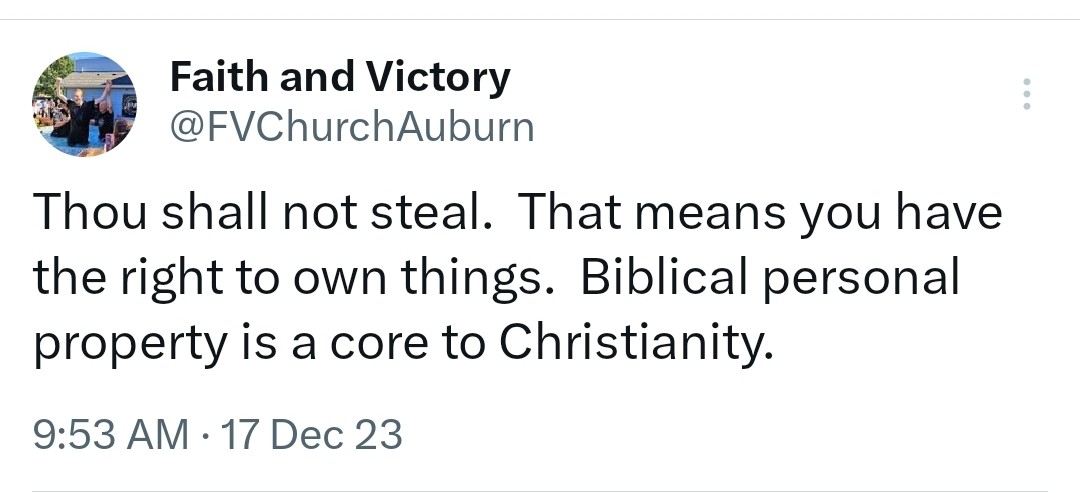
- Before we fully explain the 8th commandment of thou shalt not steal, I want to explain to you this idea of personal property and the right to own something that belongs to you.
- This idea is a very important idea to understand when it comes to what you possess, give, and think of what you are entitled to from another persons possessions that are not yours.
- Understanding biblical personal property ideals should infiltrate what you believe about life.
- Lets back up for a minute here, The reason why we are connecting the ten commandments to the ten plagues is because that what God did and does. We covered the instances of 10.
- The ten commandments were the first commandments given to the nation of Israel.
- needed to be given very clearly, with very clear consequences or they would never obey.
- You cannot have a concept of God without a concept of consequence. If there are no consequence there are no rules. There must be another side, or it is not a rule.
- Moses wrote the Pentateuch, the first 5 books of the Bible, but the ten commandments were given in History BEFORE the Pent. Was written. Moses, by design, uses the 10 commandments as the backdrop to the stories that are shared within the first 5 books to show and support what God originally spoke to Israel- the ten clearly defined timeless commandments they must follow
- God never changes and has not changed. He is the same God of Genesis, Matthew and Rev.
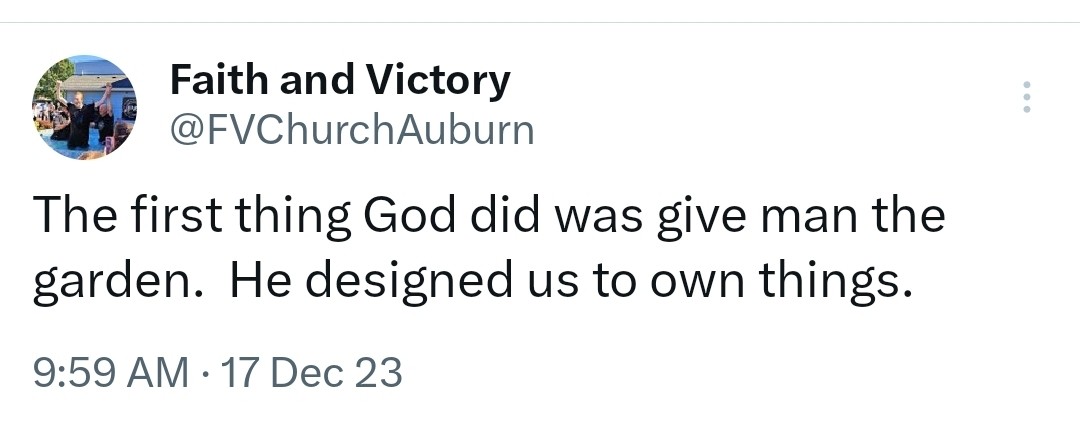
- God had these commands from the beginning, even in the garden of eden.
- These stories show us what happens when we break the commandments of God.
- Ge2:15-17
- From the beginning, God gave property to man. This is yours. Keep it. He put the desire for ownership into Adam. It was God’s design that we would own things. And CONSEQUENCE
- Genesis 1:26 Then God said, “Let Us make man in Our image, according to Our likeness; let them have dominion over the fish of the sea, over the birds of the air, and over the cattle, over all the earth and over every creeping thing that creeps on the earth.”
- He gives him dominion over the whole earth but says- there’s one part that is not yours
- He showed man- everything does not belong to you- You don’t get this one. It’s mine
- Do not steal from me. Do not take what is not yours. I give you all but what is mine.
- Some people never get this- Milano cookies when I was a kid. Big no-no. Sodas. NO
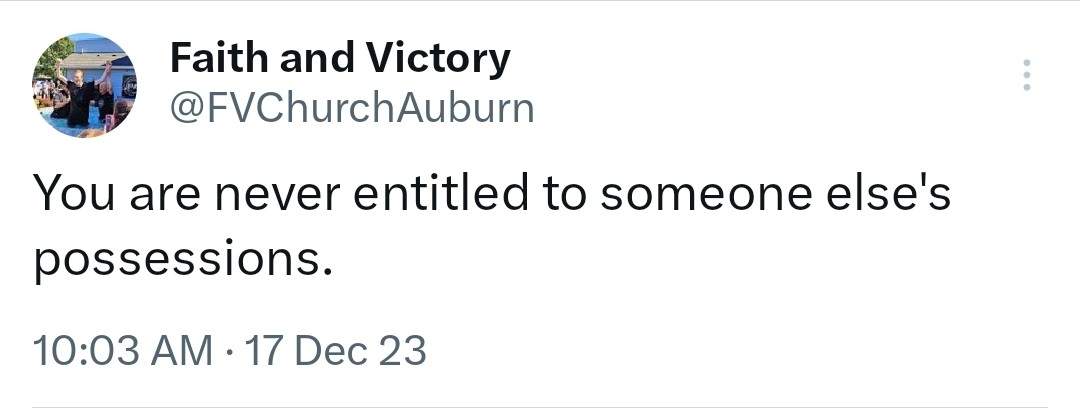
- The idea is somethings do not belong to you. They belong to someone else.
- THIS- This is a very important distinction. Many people cannot fathom this basic biblical truth that somethings do not belong to you. You are not entitled to someone elses possessions.
- Tree- not yours. Don’t steal. The garden is property it has boundaries and it has rules.
- Adam is supposed to guard the garden, and possess Property. An item that is HIS.
- Think about the story we’re int. Moses goes to Pharoah and says you can’t own these people they are God’s property, I am taking them to the “promised land” where they will have property.
- These are 3 important distinctions you must understand before moving forward
- There are things that belong to you. They are yours. There are things that belong to others, they are theirs. There are things that belong to God and they are his.
5. The Commandment
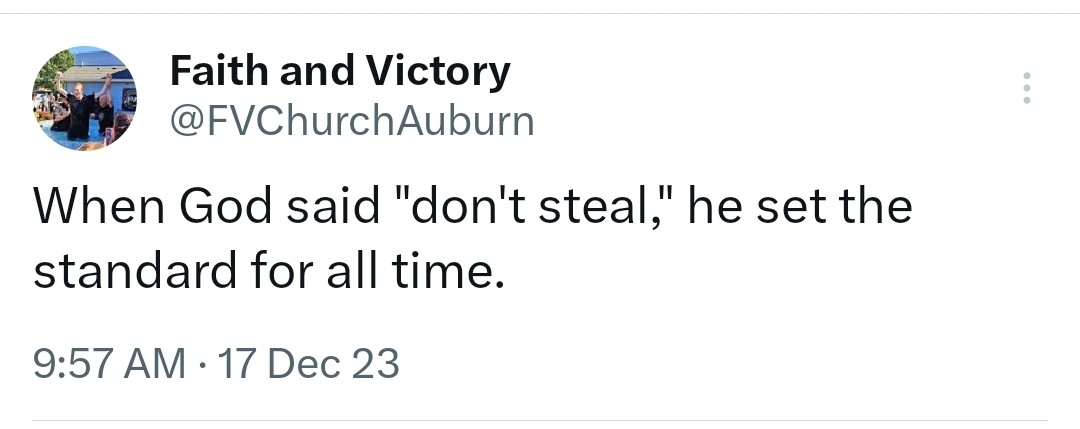
- The 8th commandment is Exodus 20:15 You shall not steal.
- Pretty simple. Don’t take what isn’t yours. People are allowed to own property, you are not allowed to take it from them.
- This simple commandment can be the deterrent and connection to the 10th (do not covet) and other sins of envy, jealousy, gossip, hatred and the like.
- This means taking what is not yours either by force or deception. When something belongs to someone else, you should not desire it, nor commit deceit to acquire it.
- The Bible makes clear that we should not be thieves
- Ephesians 4:28 Let him who stole steal no longer, but rather let him labor, working with his hands what is good, that he may have something to give him who has need.
6. The connection
-
- Pharoah had taken the Israelites as his property, the Egyptians worshipped a God who took what was not his, so God sends a plague to destroy what Pharoah had immorally stole-
- The locusts are judgement upon Pharoah’s thievery. Once again the false God cannot stop.
-
- In this challenge to the Pharoah, God challenges him that generations from now they will remember this- 10:2 and that you may tell in the hearing of your son and your son’s son the mighty things I have done in Egypt, and My signs which I have done among them, that you may know that I am the Lord.”
- God’s establishment of personal property and not stealing others will be known forever in this, this plague is more important than all the others- the only one this is mentioned.
- Now, if we consider the commandment “You shall not steal,” we understand it in the context of respecting other people’s property rights and possessions. People own stuff.
- The locust plague, in its destructive nature, seen metaphorically as an act of “stealing” the livelihood and sustenance of the Egyptians. You steal from God, there will be consequence
- The devastation caused by the locusts symbolize a form of economic loss and deprivation, aligning with the principles of not taking or damaging what rightfully belongs to others.
- Bible says Satan comes to steal, kill and destroy. That’s what Set did. Destroyer.
7. The Application.
- Do not take what is not yours. Army Ex 20:15- Going back into Lowes xmas lights.
- This means what is not yours does not belong to you and you are not allowed to take it.
8. Other people’s items
- This means do not take from your work, your church, your neighbors, your friends etc.
- Do not take at work because you can. I had mats from Cintas, boss said to keep
- Someone stole the printer cable from the office. People ‘borrow’ chairs.
- If your neighbor has something unsecured. You borrow and not return.
- Do not steal another man’s labor James rebukes the rich in James 5 4 Indeed the wages of the laborers who mowed your fields, which you kept back by fraud, cry out; and the cries of the reapers have reached the ears of the Lord of Sabaoth.
- You cannot steal another man’s labor. Their labor is their outcome. It belongs to them.
- you should not vote for people who want to steal someone else’s money, property or labor and give to someone else. Your biblical worldview should infiltrate your politics.
- You cannot force someone to work for another person. You should not take someone elses money or property. Taxes are necessary in society. Excessive mis-managed taxes cannot be increased just because they cannot be managed well. I want billionaires to keep THEIR stuff.
- When you vote and encourage punishing the rich you are stealing. They are real people.
- If you get rich by stealing the labor from other people, you are a thief.
9. Cant keep what Belongs to God
- From the garden, God established- Everything does not belong to you. Some belongs to me
- How am I robbing God? Mal 3:8 “Will a man rob God? Yet you have robbed Me! But you say, ‘In what way have we robbed You?’ In tithes and offerings.
- tithe in the garden of eden of thou shall not steal is that God owns something and you don’t
- I don’t have to give you what is mine, but I will give you most of what I gave, but I am reserving somethings for me. It does not belong to you. There are limits in life w consequences.
- God graciously gives us the means to produce what we need to provide for ourselves and our families, and it belongs to us. The 90% that is left after what belongs to God
- People will become the quickest bible scholars in the world to justify why they don’t have to tithe. Why? Well, they’ve internalized the truth from Genesis, Man has property, this is mine, just distanced themselves from the other part of Genesis- You don’t get it all. Some is God’s.
- If the commandment is “do not steal” do not take what is not yours and 10 belongs to God, and you keep it for yourself to spend on your own pleasures, what is that called?
- The only corporation in the entire world that still owns property is the church in America.
- God owns the property and the tithes buy it. It belongs to him. It cannot be taxed.
- As soon as they start taxing property you do not own it. The church is the last property that is actually owned bc it does not pay taxes. They want to take away the tax property ownership
- We are the last bastion to keep us from communism. That’s what communism is- own nada.
- This is why Christians cannot be communist or Marxist. God gives us what we own. Minus his.
10. The remedy
- Learn to not be greedy, covetous, jealous person who desires to satisfy yourself with other peoples and God’s money. Do not be a hoarding miserly keeper that wants it all for self
- Do not take from others and call it generosity. Do not take what it not yours
- Break yourself from the mindset of wanting everything. Be content in the Lord.
- Proverbs 11:24-25 There is one who scatters, yet increases more; And there is one who withholds more than is right, But it leads to poverty. 25 The generous soul will be made rich,
- And he who waters will also be watered himself.
- Learn to be generous. Don’t let money control you. You control your money
- Realize that everything you have has been given to you by God. Share.
- Thank God for what you do have, don’t think so much about what you don’t have
- Don’t have a heart that wants to force someone else to be generous. You are not God.
- Don’t steal from Man or God or support people that do. Don’t be a locust or Set.
For more sermons please visit our SERMON PAGE
Please subscribe to our YOUTUBE PAGE